Fire season in Los Angeles is no longer a few weeks on the calendar. It runs through the driest, hottest months of the year, and for homes in Pacific Palisades, Malibu, the Hollywood Hills and Altadena, the roof is one of the first real lines of defense a house has.
Short answer: A Class A fire rating is the highest fire resistance classification a roof assembly can earn under standardized testing. It means the roof has been tested against flame spread, burning brands and heat exposure and passed at the top tier. Not every roofing material qualifies on its own, and how the roof is put together matters as much as what it is made of.
What Class A Actually Means
Roof assemblies are tested and classified as Class A, B or C based on how they perform under fire exposure. Class A represents the best resistance to flame spread and the lowest susceptibility to ignition from burning debris landing on the roof, which in a wind-driven Southern California fire is the realistic threat. Embers travel a long way ahead of a fire front, and they land on roofs.
This is not a marketing phrase. It comes from standardized testing, and it is the rating that fire-conscious homeowners and insurers in high-risk areas actually look for.
The Most Fire Resistant Roofing Materials
Several of the systems we install reach Class A, though in every case the assembly matters as much as the surface.
- Clay and concrete tile are noncombustible by nature, which is a large part of why tile has been trusted in Southern California for as long as it has.
- Natural slate offers excellent fire resistance where it suits the home’s style and the structure can carry it.
- Standing seam metal roofing is non-combustible as a surface and, installed as part of a Class A assembly, stands up well to ember and flame exposure.
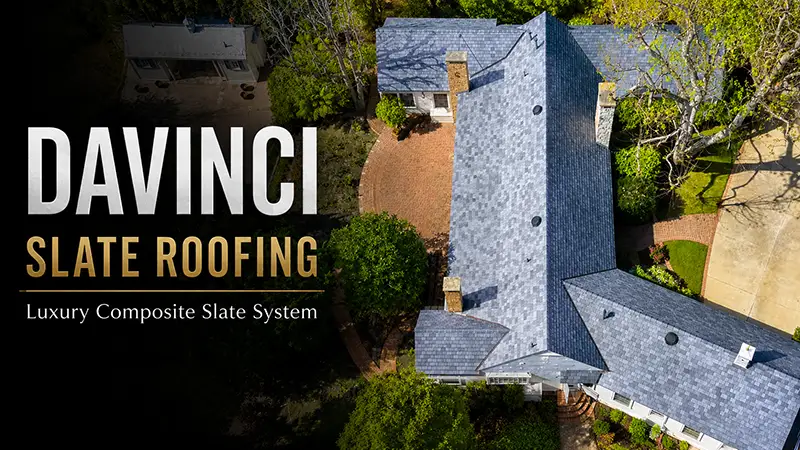
- Composite tile, meaning DaVinci and Brava, gives you the look of slate or cedar shake with genuine Class A performance and a service life commonly rated at 50 years or more. That combination is why it has become such a common choice on hillside homes.
Why the Assembly Matters More Than the Material
A fire resistant surface installed over the wrong underlayment, with gaps at ridges and valleys, or without proper attention to where the roof meets vents and flashing, does not perform the way a properly built Class A system does.
This is where installation quality actually shows up. Not in how the roof looks on the day it is finished, but in how the whole assembly behaves under real fire exposure years later. It is also the reason we never bring in subcontractors. The same team that assesses your home is the team on the roof, so the fire rated assembly gets built the way it is supposed to be built, from the underlayment up.
Choosing the Right System for Your Home
The right Class A option depends on the architecture of the house, the neighborhood, and the look you are after. A hillside property in Malibu with heavy surrounding brush has different priorities from a Sherman Oaks home sitting closer to other structures. That is a conversation worth having on your actual roof rather than from a generic materials list.
Talk to Uldi About the Right Fire Rated System
Eclipse Remodeling and Roofing has served Los Angeles homeowners for nearly 20 years, with owner Uldi Zadok personally involved in every project. No subcontractors, ever. Just a custom-built roof, done right for your specific home.
Call (818) 497-3449 to talk through the right Class A option for your property, or get in touch here.
Frequently Asked Questions
Is Class A the highest fire rating a roof can have?
Yes. Roof assemblies are tested and classified as Class A, B, or C, and Class A is the top tier. It represents the strongest resistance to flame spread and the lowest likelihood of ignition from burning embers landing on the roof.
Which roofing materials are the most fire resistant?
Clay and concrete tile and natural slate are noncombustible by nature. Standing seam metal is non-combustible as a surface. Composite tile products such as DaVinci and Brava are manufactured to achieve Class A performance. In every case the rating belongs to the tested assembly, not to the surface material on its own.
Can any roofing material achieve a Class A rating?
No. Some materials qualify only as part of a specific tested assembly, with a particular underlayment or barrier beneath them, and some do not reach Class A at all. This is why the underlayment and the installation details matter as much as what you can see.
Does a fire rated roof affect homeowners insurance in California?
Many insurers writing in fire-exposed parts of California do consider roof fire rating when they assess risk. How much it affects a specific policy varies by carrier, so confirm it directly with your insurance provider rather than assuming.
How long do Class A roofing materials last?
Several of the materials that reach Class A are also built for long service. Composite tile and standing seam metal are commonly rated for 50 years or more depending on the product and how it is installed.
Does a Class A rated roof cost significantly more?
It depends entirely on which material you choose. Composite tile and metal are competitive against other premium roofing options, so it is worth talking through the specifics for your home rather than assuming a fire rated roof is automatically a large step up.